Photo by AJ Garcia on MiDignidad.com

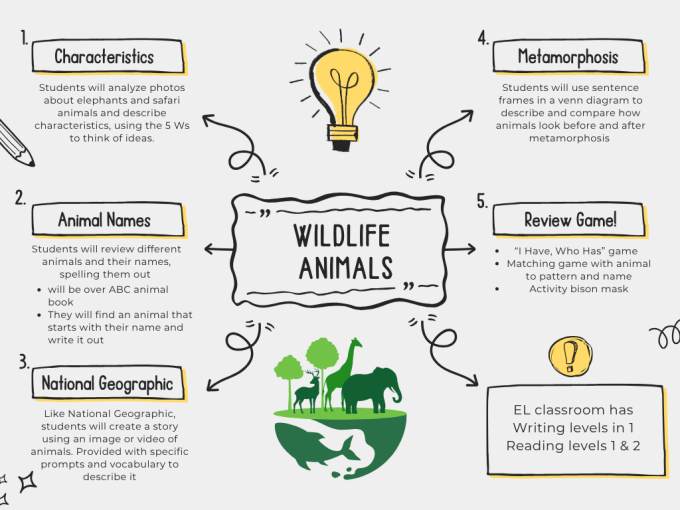
First lesson of the unit: how to describe characteristics of animals
Title: Characteristics
Content Area: English & animals Grade Level: 4th Language Level(s): Nebraska English Language Proficiency Standards Addressed: ELPA 4-5.3.L2 Nebraska State Content Standards Addressed: LA.4.F.4 LA.4.W.4.b
Topic of the Lesson & Rationale (Why is this important?): Good practice and skill to have when describing an event or something they see/remember. Also, a good preparation for their ELPA exam.
|
Assets my MLs bring to the class: Showing images of animals they may know and have seen in their country or can describe and name it in their home language. Materials Needed:
|
Objectives(s): Content Objective: SWBAT analyze photos and describe what they see with at least 2 examples. Language Objective: SWBAT complete the graphic organizer by examining the images, using sentence frames and their background knowledge of elephants with 80% accuracy. Cultural Objective: SWBAT find a connection and state an animal they have seen or know in their home language with a minimum of one example.
|
Vocabulary
|
ESL Strategies Used:
|
Questions: What do you see? Think of the color, size, or texture. Look at the background. What is happening? My sentences start with “I see…”, can you try? How did you get that answer? Where do you see it?
|
Anticipatory Set https://www.prekinders.com/wildlife-i-have-who-has-game/ Split up the “I have” cards evenly to each student, or if 1-on-1, take turns stating “I have, who has” practicing saying animal names. To make it challenging, students can only describe their animal in “who has” without saying the animals name to practice visual describers and others listening for the clues. For example, “who has a red crustation? – I have a crab!”
|
Beginning of Lesson: I Do/We Do After playing a round of the game, I will show them only animals from Africa, asking them to describe what they see using the prompt “I see…” or “I notice…”. I will give an example first or tie it back to our game stating “I see a spotted long neck animal.”
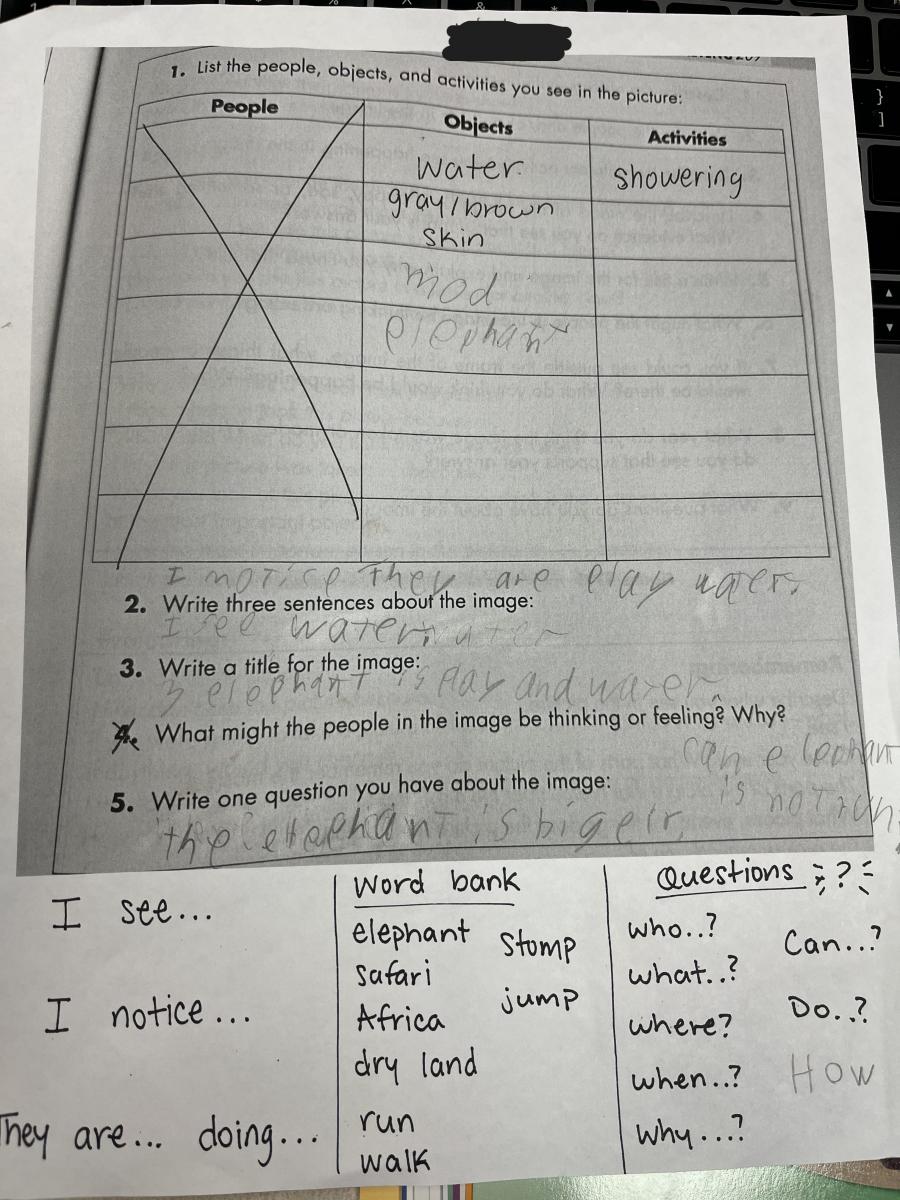
I will write down their responses on a white board first to create a word wall. I will then explain what they just did of examining a photo, and model a different photo with the graphic organizer.
|
Middle of Lesson: You Do It Together The student will now use the graphic organizer to fill out the “objects” and “activities” sections with a partner or independently. They can do think-alouds and share ideas to agree on before writing it down. Alphabet and letter sounds can be provided to help spell out. Student needs 2-3 examples in each category. |
End of the Lesson: You Do It Alone The student will complete the rest of the graphic organizer, answering questions 2, 3, & 5, after I read it to them (for level 1), explain it, and have them share their thoughts before writing it down. Sentence frames and vocabulary will be provided. If more advanced, student can write 2-3 sentences or provide more examples in their chart; able to provide more background and have a verbal discussion in English or home language. |
Assessment Statement: Completion of the graphic organizer (formative). Use of complete sentences; beginning letter is capitalized and punctuation at the end. Think and share throughout the discussion. Can describe or point out at least 2 things from an image. |
Closure: Explain the importance of when it comes to describing things and how we do it every day in normal occurrences, not just in writing. Have them describe and point out what an animal is doing the next time they see one to tell us! For example, my dog who is brown and small, was running on the grass. |
Student example: